Small kitchens have a reputation for being the most frustrating rooms in a home to live with and the hardest to renovate well. Too little storage. Too little workspace. Too little room to move when more than one person is trying to use the kitchen at the same time. The problems are real and they are daily, which is why a small kitchen renovation, done well, delivers a quality of life improvement that few other projects in a home can match per square foot of space renovated.
The cabinet decisions in a small kitchen renovation carry more weight than in any other context. In a large kitchen, a poorly planned cabinet layout is an inconvenience. In a small kitchen, it is the difference between a space that functions adequately and one that functions at its full potential. Every cabinet position, every configuration choice, every interior storage decision either adds to or subtracts from the total functional capacity of a space that has very little margin for waste.
This guide covers the cabinet strategies, configurations, and design principles that make small kitchens work better than their square footage suggests they should. Every recommendation is drawn from what actually delivers results rather than what looks appealing in a staged photograph.
The Most Important Principle in Small Kitchen Cabinet Design
Before addressing any specific cabinet configuration or storage strategy, there is one principle that underlies every successful small kitchen renovation and that should be understood before any other decision is made.
In a small kitchen, the cabinet layout determines the function of the space. In a large kitchen, the function is largely determined by the layout and the cabinet layout fills the available space around it. The distinction matters because it changes the design sequence. In a large kitchen, you design the room and then fill it with cabinets. In a small kitchen, you design the cabinet system first and let everything else respond to it.
This means that the first question in a small kitchen renovation is not what color are the cabinets or what style is the door profile. The first question is how much storage does this kitchen need to function at the level the household requires, and where can that storage be created within the available footprint. Color and style come after the storage problem is solved. A beautifully colored cabinet in a layout that does not provide adequate storage is a beautiful kitchen that does not work.
Go Floor to Ceiling Wherever the Wall Allows
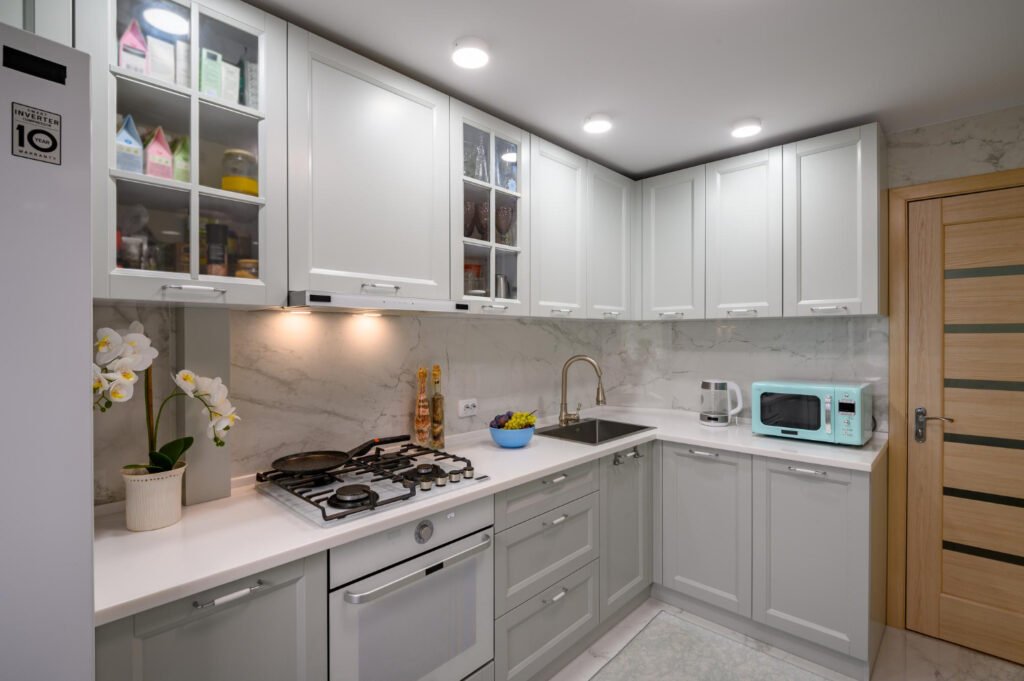
The single most impactful small kitchen cabinet strategy available is extending wall cabinets to ceiling height rather than leaving the standard gap between the top of the wall cabinet and the ceiling. In a kitchen with eight-foot ceilings, the gap between a standard thirty-inch wall cabinet and the ceiling is approximately eighteen inches. In a kitchen with nine-foot ceilings, that gap reaches twenty-four inches or more.
This space is not empty. It is unused storage volume that a standard cabinet layout abandons. In a small kitchen where every cubic inch of organized storage matters, ceiling-height wall cabinets recover that volume and add it to the total cabinet capacity of the kitchen without requiring any additional floor footprint.
The practical application is to use taller wall cabinets, which are available in thirty-six and forty-two inch heights in addition to the standard thirty-inch height, or to add a stacked cabinet above the primary wall cabinet run. The upper stacked cabinets can store less frequently accessed items, which means they do not need to be at the most convenient reach height, and the additional storage capacity they provide is substantial.
In a small kitchen, ceiling-height cabinets also create a visual effect that makes the room feel taller and more expansive. The uninterrupted vertical line from countertop to ceiling draws the eye upward rather than across the room, which reads as increased ceiling height even when the actual dimension is unchanged.
Our DDW Double Dove White in ceiling-height wall cabinets creates the brightest, most spatially generous result possible in a small kitchen. White reflects light from every surface and reads as the lightest possible color in a compact space. The GR Shaker Gray in ceiling-height configuration works beautifully in small kitchens with adequate natural light where the additional design sophistication of gray is not sacrificed to the brightness constraint.
Use Every Wall Including the Ones Above Doorways and Windows
Small kitchens rarely have an abundance of uninterrupted wall space, which is why the wall space that exists above doorways, windows, and appliance locations is so valuable and so consistently underutilized.
The space above a doorway is one of the most overlooked storage opportunities in a small kitchen. A cabinet box fitted into the space above a doorway, at the same height as the primary wall cabinet run, creates storage for rarely accessed items like seasonal equipment, backup stock, or infrequently used serving pieces. The storage volume is modest but in a small kitchen, every modest contribution to total storage capacity matters.
The wall space above windows, if the window is positioned below the standard wall cabinet installation height, can accommodate shorter wall cabinets that sit above the window trim without obstructing the window or the light it provides. These shorter cabinets require custom sizing in some configurations but are available in standard widths that make them accessible within a quality RTA cabinet budget.
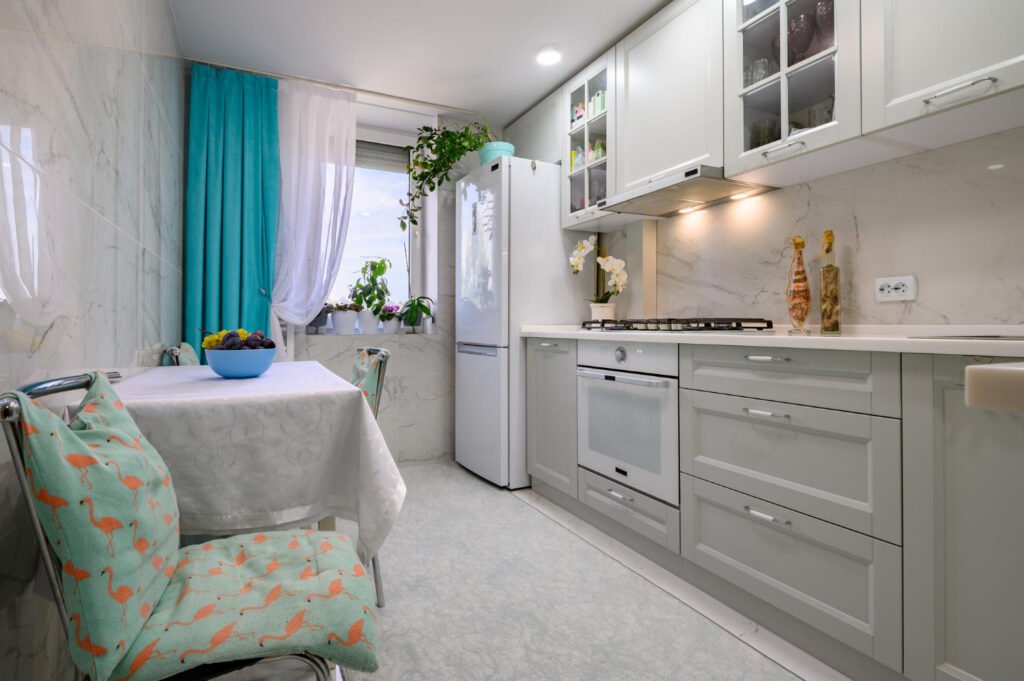
The wall above the refrigerator is the most commonly wasted wall space in a standard kitchen layout. A refrigerator cabinet that spans from the top of the refrigerator to the ceiling, matching the width of the refrigerator, converts this dead zone into organized storage. In a small kitchen, a properly sized refrigerator cabinet adds meaningful storage volume at a position that does not interfere with any work surface or traffic flow in the kitchen.
Maximize Base Cabinet Interiors With Pull-Out and Drawer Configurations
Standard base cabinet interiors with fixed shelves waste a significant portion of the storage volume they nominally provide because items stored at the back of the shelf are functionally inaccessible without removing everything stored in front of them. In a large kitchen, this friction is an inconvenience. In a small kitchen where base cabinet storage is the primary storage resource for everyday cooking equipment and supplies, it is a genuine functional failure.
Pull-out shelves installed within standard base cabinet door configurations bring the entire shelf depth to the front of the cabinet when extended, making every item stored on the shelf visible and accessible simultaneously. The effective storage utilization of a base cabinet with pull-out shelves is substantially higher than the same cabinet with fixed shelves because accessible storage is used storage and inaccessible storage becomes the place where forgotten items accumulate.
Drawer configurations in base cabinets, where the full cabinet face is occupied by three or four stacked drawers rather than a door with interior shelves, maximize the accessibility of stored items dramatically compared to door-and-shelf configurations. Every drawer provides full-extension, full-visibility access to its contents. Three drawers in a standard twenty-four inch base cabinet provide more functionally accessible storage for cooking equipment, utensils, and supplies than the same cabinet with two doors and interior shelves.
In a small kitchen where maximizing the functional capacity of every cabinet position is the primary design challenge, specifying drawer configurations in base cabinets wherever the storage application supports it is one of the highest-return decisions available.
Use Light Colors to Create the Perception of More Space
The relationship between cabinet color and perceived kitchen size is not a design myth. It is a well-understood optical principle with direct implications for small kitchen cabinet selection.
Light colors, and white in particular, reflect available light from every surface they occupy. In a small kitchen where wall cabinets cover the majority of the upper wall area, white cabinet fronts reflect the overhead lighting back into the room and create a brightness that reads visually as expanded space. Dark cabinet colors in a small kitchen absorb light rather than reflecting it, which reduces the apparent brightness of the space and creates a visual compression that makes the room feel smaller than its actual dimensions.
This does not mean small kitchens must be white. It means that the decision to use a bold or dark cabinet color in a small kitchen should be made with the understanding that the visual trade-off is real and should be compensated for with strong natural light, light countertop materials, and reflective backsplash surfaces that recover some of the brightness that darker cabinet colors absorb.
Our DDW Double Dove White is the most effective cabinet color for maximizing the perceived size of a small kitchen. Its warm dove tone reflects light generously without the clinical sterility of a pure bright white, and in ceiling-height cabinet configuration it creates the most spatially generous result available in a compact kitchen footprint. For buyers who want more design character than white provides, our GR Shaker Gray in a small kitchen with strong natural light creates sophisticated warmth without the spatial compression that darker colors create.
Incorporate Open Shelving Strategically
Open shelving in a small kitchen serves two purposes that closed cabinet configurations cannot replicate simultaneously. It creates the visual openness that makes the kitchen feel larger by replacing the visual weight of a cabinet door with the lighter visual presence of a shelf and its contents. And it provides accessible storage for frequently used items that benefits from instant visibility rather than requiring a door to be opened.
The strategic application of open shelving in a small kitchen is to replace one or two wall cabinet positions with open shelves rather than replacing the entire wall cabinet run. A small kitchen with an entirely open shelving upper section and no wall cabinets loses storage capacity that it cannot afford to lose. A small kitchen with one section of open shelving between two wall cabinet runs gains visual openness without sacrificing meaningful storage volume.
Open shelving works best in small kitchens when the items displayed on the shelves are both attractive and regularly used. Decorative items that are never touched create visual clutter rather than visual openness. Everyday dishes, glasses, and attractive storage containers that are used regularly create the organized, curated appearance that makes open shelving a genuine design asset.
Our SWO Slim White Oak as open shelving alongside white shaker wall cabinets creates the warmth and material contrast in a small kitchen that makes the space feel considered and layered rather than simply compact.
Design Your Small Kitchen Before You Order
The sequence of decisions in a small kitchen cabinet project matters more than in any other renovation context because the margin for error is smaller and the impact of every decision on the total result is greater. Seeing the finished layout in a 3D rendering before ordering prevents the configuration mistakes that are expensive to correct in a compact space.
Our free design service creates a complete 3D rendering of your small kitchen cabinet layout based on your actual measurements and your chosen cabinet configuration. You see exactly how the storage works, how the visual space is affected by the color and style choices, and how the cabinet layout responds to your specific wall dimensions, window positions, and appliance locations before a single product is ordered.
👉 Browse Our Cabinet Collection for Small Kitchen Projects 👉 Get Your Free Small Kitchen 3D Design 👉 Order Sample Doors Before You Commit
The Small Kitchen That Outperforms Its Size
Every small kitchen has the same challenge and the same opportunity. The challenge is that the space is limited. The opportunity is that the same design intelligence that makes a large kitchen functional makes a small kitchen extraordinary, and in a smaller footprint, good design decisions have a proportionally larger impact on the daily experience of the space.
The cabinet layout that maximizes every available inch of storage. The ceiling-height configuration that recovers unused wall space. The pull-out interiors that make every base cabinet work at full capacity. The light color that reflects available light and creates the perception of more space than the actual dimensions provide. These are not compromises made in response to a small kitchen. They are design decisions that a small kitchen rewards more generously than any other context.
Start with your measurements. Get your free design. Build the small kitchen that works harder than you thought a kitchen this size could.