Every kitchen has a storage problem. Not because the kitchen was designed poorly, although many were. Not because the household has too much. Because the standard kitchen cabinet configuration — a run of base cabinets, a run of wall cabinets, and whatever space the appliance layout left behind — was never designed to handle the full storage demands of how modern households actually stock and use a kitchen.
The pantry cabinet is the solution to that problem.
Not a pantry room, which requires space most kitchens do not have. Not a walk-in closet converted to storage, which requires a structural intervention most renovations cannot accommodate. A pantry cabinet — a tall, purpose-built storage cabinet designed to hold dry goods, canned items, small appliances, baking supplies, and everything else that does not have a proper home in the standard cabinet run — is the single addition that changes how the entire kitchen functions.
This guide covers every dimension of the pantry cabinet decision: the configurations that work, the sizes that fit different spaces, the organizational systems that maximize every cubic inch of storage, and the buying decisions that determine whether your pantry cabinet serves the household beautifully for thirty years or disappoints within five.
Why Pantry Cabinets Solve the Storage Problem Standard Cabinets Cannot
The fundamental limitation of a standard kitchen cabinet layout is vertical space utilization. Base cabinets are thirty-six inches tall. Wall cabinets are typically thirty to forty-two inches tall. The space between the top of the wall cabinets and the ceiling, and the space that could exist in a taller storage configuration, is entirely unused in a standard cabinet layout.
A pantry cabinet reaches from floor to ceiling, or close to it, capturing the full vertical storage potential of the wall it occupies. A single thirty-inch wide pantry cabinet provides more usable storage volume than four standard wall cabinets in the same footprint. It consolidates the dry goods, canned items, snacks, and small appliance storage that currently inhabit multiple crowded base and wall cabinets into a single organized location where everything is visible, accessible, and logically arranged.
The organizational benefit compounds immediately. When dry goods have a dedicated pantry home, the cabinet space they previously occupied becomes available for dishes, cookware, or the items that actually belong near the work surfaces they support. The entire kitchen storage system reorganizes around the pantry cabinet’s presence, and the result is a kitchen that feels significantly larger and more functional than its square footage suggests.
The Main Pantry Cabinet Configurations
Tall Freestanding Pantry Cabinets
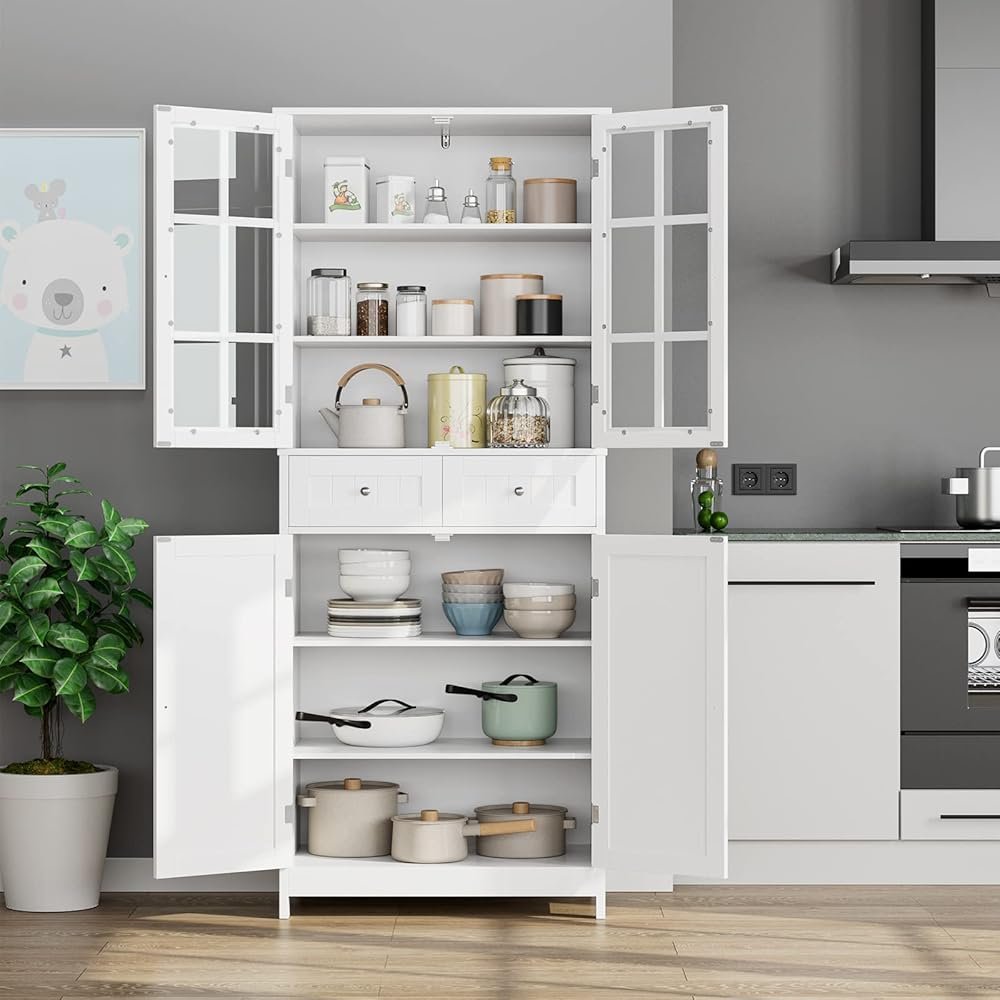
The most common pantry cabinet configuration is a tall single-door or double-door cabinet that stands between eighty-four and ninety-six inches in height and between eighteen and thirty-six inches in width. This configuration provides enclosed storage across the full height of the cabinet, with shelving adjusted to accommodate items of different heights on each shelf position.
Tall freestanding pantry cabinets work in virtually any kitchen footprint. They require only a wall position wide enough to accommodate the cabinet width and sufficient clearance in front for the door to open fully. In galley kitchens, small apartments, and compact kitchen layouts where a full cabinet surround is not possible, a single tall pantry cabinet positioned at the end of a counter run delivers storage capacity that would otherwise require a significantly larger kitchen.
The interior organization of a tall pantry cabinet is as important as the cabinet itself. Adjustable shelving allows the space to be reconfigured as storage needs change over time. Pull-out shelves at lower heights improve access to items stored at the back of the cabinet. Door-mounted organizers on the inside of the door utilize space that a fixed-shelf interior leaves completely unused.
Built-In Pantry Cabinet Systems
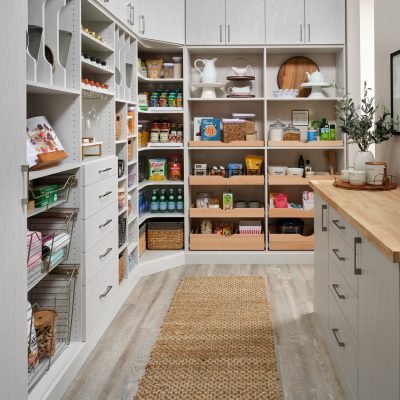
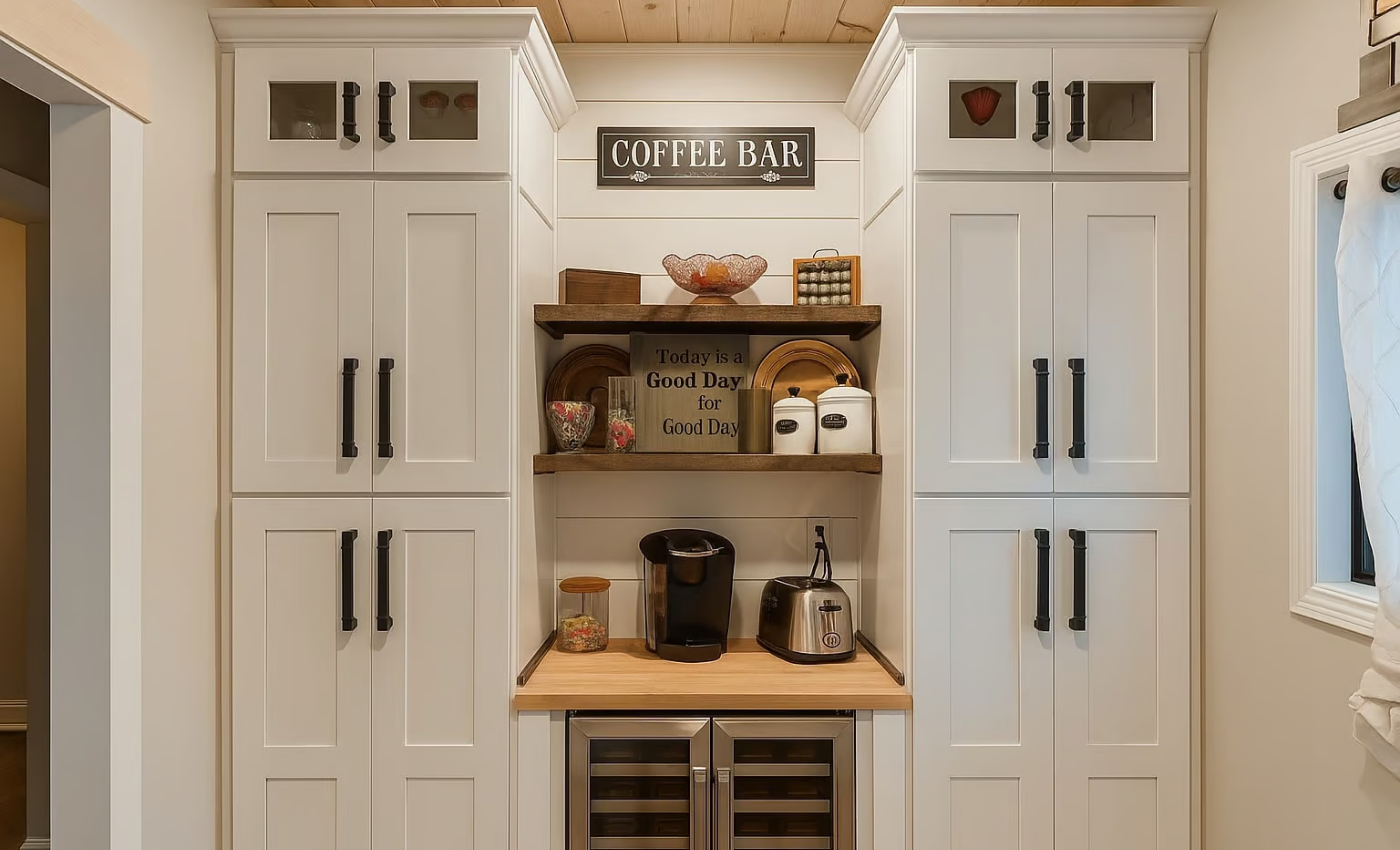
A built-in pantry cabinet system integrates tall pantry cabinets with adjacent wall cabinets, base cabinets, or open shelving to create a dedicated pantry wall within the kitchen. This configuration creates the maximum storage volume and the most cohesive visual result because every element is coordinated in style, finish, and height.
Built-in pantry systems work particularly well in kitchens with a dedicated wall available for a full-height cabinet installation. The floor-to-ceiling coverage eliminates any visual gap between the cabinet top and the ceiling, which is the detail that most clearly separates a finished, designed kitchen from one that is still in progress.
Our shaker cabinet lineup in any color supports built-in pantry system configurations using the same wall cabinet, tall cabinet, and base cabinet components that furnish the rest of the kitchen. This means the pantry wall coordinates seamlessly with the rest of the kitchen rather than looking like an afterthought added to a completed design.
Pantry Pull-Out Cabinets
A pantry pull-out cabinet, sometimes called a pantry pullout or a pantry column, is a narrow cabinet with an interior drawer system that pulls out as a single unit to reveal multiple shelving tiers rather than requiring the user to reach into a standard deep cabinet interior. The full contents of the cabinet are visible and accessible simultaneously when the unit is extended.
Pantry pull-outs are particularly effective in kitchens where the available footprint for a pantry is narrow — between nine and fifteen inches in width — where a standard door-opening pantry cabinet would not provide adequate interior access. The pull-out mechanism compensates for the narrow width by bringing the entire interior to the user rather than requiring the user to reach to the back of a deep cabinet.
Corner Pantry Configurations
Corner spaces in kitchens are among the most underutilized storage opportunities in a standard layout. A corner pantry cabinet configuration, using a diagonal cabinet or a specially configured pull-out system, converts the dead corner space into functional pantry storage without requiring any additional floor footprint.
The storage volume recoverable from a properly configured kitchen corner is substantial. A lazy Susan or full-extension pull-out system in a corner pantry cabinet position can add twenty to thirty percent of the total base cabinet storage volume of a standard kitchen purely from the space that a standard layout leaves entirely unused.
Sizing Your Pantry Cabinet Correctly
Pantry cabinet sizing is determined by three factors that need to be evaluated in combination: the available wall space, the ceiling height of the kitchen, and the clearance in front of the cabinet position for door operation and daily use.
Standard tall pantry cabinets are available in widths of eighteen, twenty-four, thirty, and thirty-six inches. The right width depends on the wall space available and the storage volume required. A single eighteen or twenty-four inch pantry cabinet delivers a meaningful storage upgrade in a space-constrained kitchen. A full thirty or thirty-six inch pantry cabinet, or a paired configuration of two narrower cabinets positioned side by side, creates a storage capacity that transforms how the kitchen functions.
Standard pantry cabinet heights of eighty-four inches work in kitchens with standard eight-foot ceilings. For kitchens with nine-foot or higher ceilings, ninety or ninety-six inch tall cabinets or a combination of a tall cabinet with a wall cabinet stacked above it to reach the ceiling creates the built-in, floor-to-ceiling result that reads as a premium design feature rather than a standard cabinet installation.
The depth of a pantry cabinet is typically the same as the base cabinets in the kitchen — twenty-four inches — which allows the pantry cabinet to sit flush with the base cabinet fronts when positioned within a continuous cabinet run. Shallower pantry cabinets of twelve to fifteen inches are available for installations where the full twenty-four inch depth would create a clearance problem, and while the storage volume is reduced, the organizational benefit of a dedicated pantry space remains significant even at a shallower depth.
Organizing the Interior of a Pantry Cabinet
The cabinet itself is only as valuable as the organizational system within it. A pantry cabinet with fixed shelving spaced at equal intervals provides less usable storage than the same cabinet configured with a mix of shelf heights, pull-out drawers, and door-mounted organizers tailored to the actual items it will store.
Designate specific zones within the pantry interior before loading it with contents. A lower zone for heavy items — canned goods, bulk grains, large containers — positioned between eighteen and forty-eight inches from the floor allows access without bending or reaching. A middle zone for everyday items — cereals, snacks, frequently used dry goods — between forty-eight and seventy-two inches from the floor puts the most frequently accessed items at comfortable reach height. An upper zone for occasional items — backup stock, seasonal supplies, rarely used equipment — above seventy-two inches stores items that do not need daily accessibility without wasting the vertical space that standard cabinet layouts leave completely unused.
Pull-out shelves in the lower zone solve the single most common pantry cabinet frustration: items at the back of the shelf that cannot be seen or reached without removing everything in front. A pull-out shelf brings the entire shelf depth to the front of the cabinet when extended, making every item visible and accessible regardless of where it sits on the shelf.
Door-mounted organizers on the inside of the pantry cabinet door utilize vertical space that a fixed interior leaves completely unused. Spice racks, small jar organizers, and flexible bin systems mounted to the door interior can add twenty to thirty percent of additional storage capacity to a pantry cabinet without requiring any additional floor or wall space.
The Best Pantry Cabinet Styles and Colors in 2026
A pantry cabinet that coordinates with the rest of the kitchen creates the cohesive, designed result that a mismatched or standalone pantry unit cannot achieve. The most effective approach is to use the same cabinet style and finish as the surrounding kitchen cabinets, which creates a pantry wall that reads as an integrated part of the kitchen design rather than a storage addition bolted onto a completed room.
Our DDW Double Dove White pantry cabinets alongside matching kitchen cabinets create the bright, organized pantry wall that families consistently describe as one of the most impactful single upgrades to how their kitchen works. The GR Shaker Gray pantry wall creates a sophisticated, furniture-like storage feature that elevates the entire kitchen design. The NB Navy Blue pantry cabinet as an accent element against a primarily white or gray kitchen creates a bold, intentional design statement that turns the pantry wall into a focal point rather than a background element.
Every pantry cabinet in our lineup uses the same plywood box construction, solid wood shaker door frames, dovetail drawer joinery, and soft-close hardware that makes our kitchen cabinets the quality standard in our lineup. The pantry cabinet is subject to heavier loading and more frequent access than a standard wall cabinet, which makes the structural integrity of plywood construction and quality hinge hardware more consequential rather than less.
Get Your Free Pantry Design
Not sure which pantry configuration fits your kitchen, which size maximizes the available wall space, or how a pantry cabinet integrates with your existing or planned kitchen layout? Our free design service covers pantry planning with the same professional 3D rendering and precise cabinet count service that we provide for full kitchen renovations.
Submit your kitchen dimensions and the wall position you are considering for a pantry cabinet. We will show you exactly how the finished pantry wall looks in your space, how much storage it provides, and what it costs — before you commit to a purchase.
👉 Browse Our Full Pantry Cabinet Collection 👉 Get Your Free Pantry and Kitchen Design 👉 Order a Sample Door Before You Commit
The Kitchen Storage Problem Has a Solution
Every household that has lived with a kitchen storage problem longer than they should have has accepted an unnecessary daily frustration. The solution exists. It is not a larger kitchen. It is not a major renovation. It is a pantry cabinet positioned in the right place with the right interior organization and the right construction quality to serve the household reliably for the next thirty years.
The kitchen you want, organized the way you need it to work, is one cabinet decision away from being the kitchen you have.
Start with a sample. Get your free design. Build the storage system the household has needed since the day you moved in.