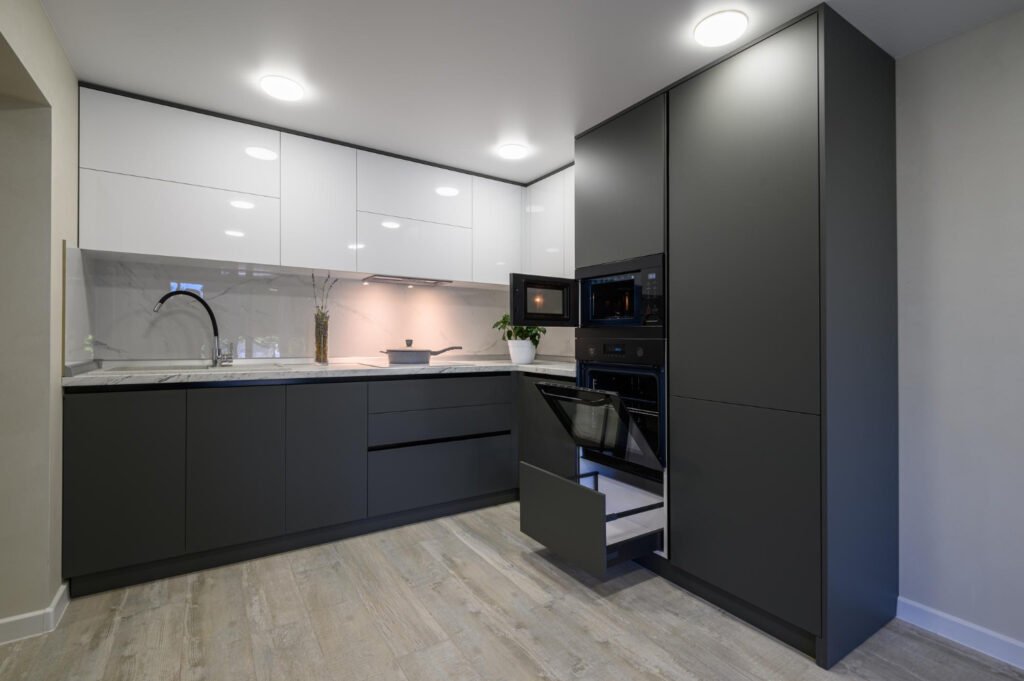
The kitchen cabinet door is the most visible and most touched component of any kitchen renovation. Every drawer opened, every cabinet accessed, every meal prepared in the kitchen involves contact with the cabinet door in some form. It is the surface that defines the visual character of the room from across the kitchen, and it is the component whose material quality and construction standards have the most direct effect on how the kitchen looks and functions five, ten, and twenty years after installation.
Most buyers spend more time selecting a countertop material than they spend understanding what makes a cabinet door worth purchasing. This is a consequential inversion of priorities because countertops, while significant, are a relatively straightforward category where price and material type align predictably with quality. Cabinet doors are not. The cabinet door market contains genuinely excellent products and genuinely poor ones at surprisingly similar price points, and distinguishing between them requires knowing exactly what to look for before any purchase is made.
This guide covers everything: the door styles that work in 2026, the material and construction standards that separate quality from imitation, the finish types that determine long-term appearance, and the buying checklist that ensures every door you install is worth the cabinet it is attached to.
Why the Cabinet Door Is the Most Consequential Quality Decision
Every kitchen cabinet has two functional components: the box that provides the structural shell and storage volume, and the door that provides access, defines the visual appearance, and determines the quality impression the cabinet creates. Both components matter. But the door is the one that interacts with the household thousands of times every year and that the room’s visual character is built upon.
A quality cabinet box with a poor-quality door produces a kitchen that looks and feels cheap regardless of the investment made in the box construction. A quality door on a quality box produces a kitchen that performs and appears at the level the renovation investment deserves. This is why door quality and box quality must be evaluated together rather than treating one as more important than the other.
The door quality standards that matter are the same regardless of whether the doors are purchased as part of a complete cabinet set or as replacement doors for an existing cabinet structure. Material selection, construction method, joint quality, and finish durability are the specifications that determine whether a kitchen cabinet door serves the household well for thirty years or disappoints within five.
The Main Kitchen Cabinet Door Styles and What Each Delivers
Shaker Doors
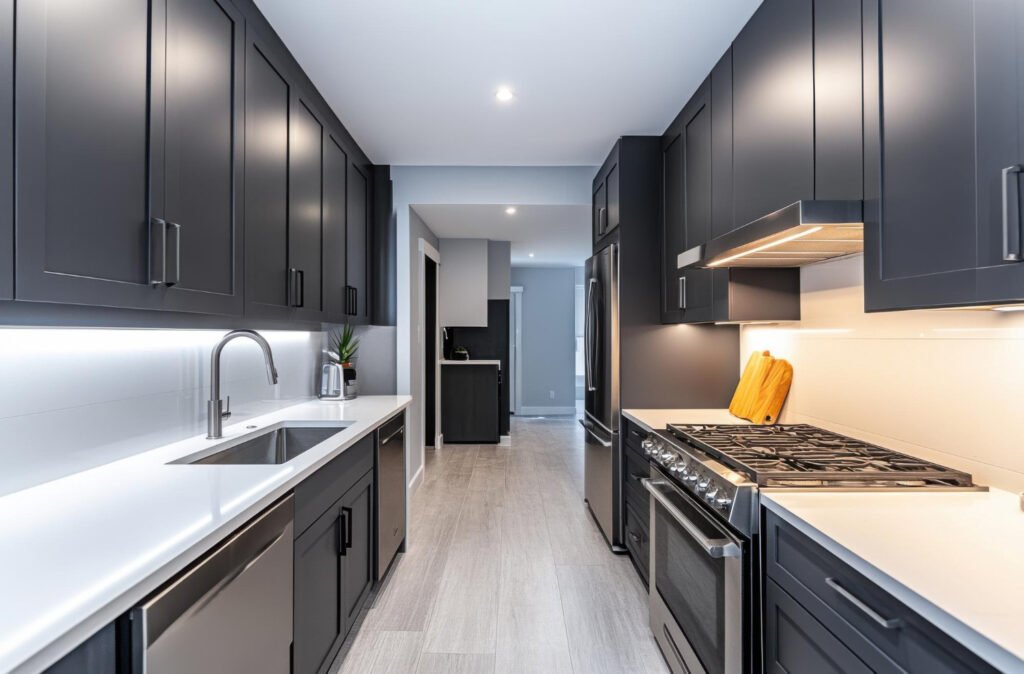
The shaker cabinet door is the most purchased, most recommended, and most consistently successful kitchen cabinet door style in the United States, and its dominance in 2026 reflects a design truth rather than a trend cycle. The five-piece construction of two vertical stiles, two horizontal rails, and a recessed center panel creates a door with architectural character, material substance, and visual adaptability that no other door style matches across the full range of kitchen design contexts.
Shaker doors work in modern kitchens, traditional kitchens, farmhouse kitchens, transitional kitchens, and every point between those four poles. They accept every hardware style, complement every cabinet color, and look equally appropriate at every price point of renovation investment. The shaker door is the choice that will never require explanation or defense regardless of how design preferences shift over the next two decades.
Our DDW Double Dove White and GR Shaker Gray both use the classic shaker door profile with genuine five-piece solid wood construction. The result is a door that feels as quality as it looks and performs as well as it appears from across the room.
Flat Front or Slab Doors
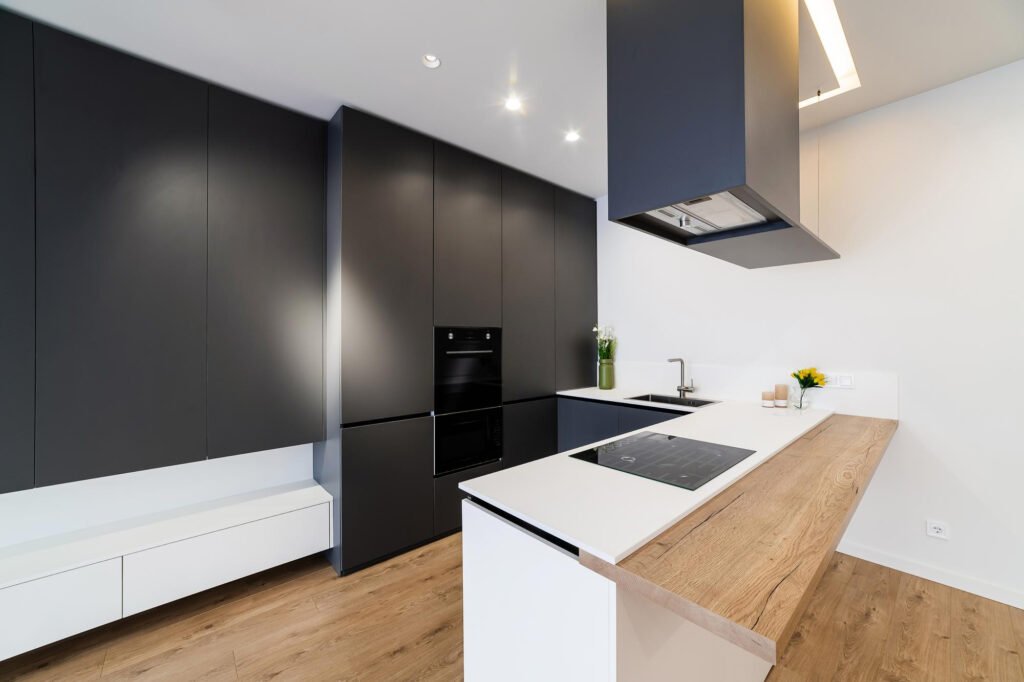
A slab door is a single flat panel with no applied profile, molding, or recessed detail. The door surface is entirely smooth, which creates the cleanest, most minimal cabinet aesthetic available. In contemporary European-influenced kitchen design, slab doors in high-gloss lacquer or matte painted finishes create a graphic, architectural quality that shaker doors with their inherent profile detail cannot match.
The practical consideration with slab doors is that the flat surface shows fingerprints, water spots, and surface marks more prominently than profiled doors where any shadow line from the shaker recess or raised panel creates visual variation that distracts the eye from minor surface imperfections. In a household with children or heavy daily kitchen use, slab doors require more frequent cleaning to maintain their intended appearance.
Raised Panel Doors
A raised panel door is the most traditional option in the American kitchen cabinet vocabulary. The center panel of the door is raised above the frame surface rather than recessed below it, which creates a more ornate, furniture-like quality than the shaker profile. The additional complexity of the door profile adds fabrication cost and creates more surface variation that can accumulate dust and require more attentive cleaning than a flat or recessed profile.
Raised panel doors work most naturally in formally traditional, classic American, and high-end transitional kitchen designs where the decorative complexity of the door profile is consistent with the ornate quality of the surrounding design elements.
Beadboard Doors
Beadboard cabinet doors incorporate vertical groove detail within the center panel, creating a cottage, farmhouse, or coastal character that is distinctive within the broader kitchen cabinet style vocabulary. They are more appropriate in specific design contexts than shaker doors and work less universally across different kitchen styles, which makes them the right choice for buyers committed to the farmhouse or coastal design direction and less appropriate for buyers seeking versatility.
Cabinet Door Materials: What Separates Quality From Imitation
The material used to construct a cabinet door determines its long-term dimensional stability, its finish performance, and its structural durability under the temperature and humidity variation of a kitchen environment. Understanding the difference between material categories is the most important technical knowledge a cabinet buyer can have before placing an order.
Solid Wood
Solid hardwood door frames are the quality standard for painted and stained kitchen cabinet doors. Maple is the most common species for painted finishes because its consistent, fine-grained surface accepts paint evenly without grain showing through the finished coat. Birch performs similarly to maple and is often used as a cost-competitive alternative. Alder has a softer texture that works well for painted finishes in moderate-use kitchens. Oak, both white and red varieties, provides the grain character that makes it the natural choice for stained and natural wood finishes.
Solid wood door frames maintain their structural integrity under humidity variation in ways that manufactured wood products cannot match. The wood expands and contracts slightly with seasonal humidity changes, but does so uniformly in a way that maintains the relationship between the door components without creating the finish cracking and joint separation that manufactured wood products exhibit under the same conditions.
MDF Core Doors
Medium density fiberboard doors are manufactured from wood fiber compressed with adhesive under heat and pressure. The resulting material is dimensionally consistent in controlled factory conditions and accepts paint smoothly, which is why it appears in cabinet products at every price point including some marketed as premium options.
The limitation of MDF in a kitchen environment is its behavior under moisture exposure. MDF absorbs moisture and expands perpendicular to its surface when humidity increases. In a kitchen where this cycle repeats daily for years, the expansion stress concentrates at the corners and edges of the door where the material is most constrained, which produces the finish cracking that is one of the most common and most visible failures in painted kitchen cabinet doors.
MDF core doors are not without merit. In very dry climates with consistent humidity levels and in kitchens with excellent ventilation, their service life can be comparable to solid wood in many applications. In the majority of American kitchen environments, solid wood door frames provide meaningfully better long-term performance.
Thermofoil Doors
Thermofoil cabinet doors are constructed from an MDF core wrapped in a vinyl film that simulates a painted or wood-grain finish. They are the least expensive door option available and their initial appearance in a showroom or product photograph is often indistinguishable from a painted wood door.
Their performance in a kitchen environment is significantly inferior to either solid wood or well-applied painted MDF. The vinyl film can separate from the MDF substrate at corners and edges when exposed to heat, particularly near a range or oven. Once the film begins to lift, the deterioration accelerates and the door cannot be repaired. Thermofoil doors near heat sources typically begin showing separation within three to seven years in a regularly used kitchen.
Any cabinet door described as thermofoil or vinyl-wrapped should be understood as the lowest-performance door material in the market, regardless of its price or visual appearance at the point of purchase.
Cabinet Door Finishes: What Determines Long-Term Appearance
The finish applied to a cabinet door is as important as the material beneath it. A quality solid wood door with an inadequate finish degrades faster than a lesser door with a properly specified topcoat, and the finish type determines both the initial appearance quality and the resistance to the daily wear that kitchen doors endure.
Catalyzed or Conversion Varnish
The highest performance finish type for painted kitchen cabinet doors. A catalyzed finish hardens through a chemical reaction rather than simple air drying, which creates a film hardness significantly greater than standard paint or lacquer. The result is a surface that resists scratching, scuffing, cleaning chemical contact, and the minor impacts of daily kitchen use more effectively than any other finish type available in the residential cabinet market.
Our entire painted cabinet lineup uses a catalyzed finish system that delivers the hardness and chemical resistance the kitchen environment demands. This is the finish standard that distinguishes cabinets built for kitchen use from those built to photograph well in a showroom.
Lacquer
A traditional cabinet finish that provides a clean, even surface appearance and reasonable resistance to light kitchen use. High-quality catalyzed lacquers approach the performance of conversion varnish. Standard air-dry lacquers are softer and mark more easily under kitchen conditions. Confirming whether a lacquer-finished cabinet uses a catalyzed system is important before accepting lacquer as an adequate finish specification.
Paint
Standard interior house paint is occasionally used as a cabinet finish in the lowest price tier of the market and in DIY cabinet refinishing projects. It is not an appropriate finish for kitchen cabinet doors in any quality renovation application. Standard paint lacks the film hardness, adhesion, and chemical resistance required for a kitchen door surface and shows wear visibly within one to three years in any regularly used kitchen.
The Buying Checklist for Kitchen Cabinet Doors
Whether purchasing doors as part of a complete cabinet set or as replacement doors for an existing cabinet structure, these are the specifications to confirm before any purchase decision is finalized.
The door must be genuine five-piece construction with solid hardwood rails and stiles if it is a shaker or profiled door style. Request confirmation of the wood species used and whether the center panel is solid wood or an engineered panel product. Both are acceptable if the frame components are solid wood, but the specification matters for understanding the door’s long-term dimensional behavior.
The finish must be a catalyzed system. Ask specifically whether the topcoat is a catalyzed conversion varnish, a catalyzed lacquer, or an air-dry product. The distinction matters significantly for kitchen applications where finish hardness directly determines how well the door surface holds up under years of daily contact.
The door must be square and flat with no twist visible when sighted along the face from the door edge. A door that is not flat when it arrives will not improve after installation. Confirm every door in the order for flatness before installation begins.
The hinge boring, which is the circular cutout on the back of the door that accepts the European cup hinge, must be positioned correctly for the specific hinge and cabinet configuration being used. Confirm the boring diameter and position specification matches the hinge hardware included with your cabinet order before installation.
The finish must be consistent across every door in the set. Color variation between doors within the same order, which occurs when batches are mixed from different finish runs, creates a visible inconsistency in the installed kitchen that is impossible to correct without refinishing the affected doors. Request that all doors in a single order come from the same production batch.
Our Cabinet Doors: Built for the Kitchen, Not for the Showroom
Every door in our cabinet lineup is designed to perform in the kitchen environment rather than to look exceptional under controlled showroom lighting. The solid wood shaker frame construction, catalyzed finish system, and precision manufacturing tolerances that ensure flat, square, consistent doors across every unit in every order are the specifications that matter when the kitchen is being used rather than when it is being photographed.
The DDW Double Dove White door delivers the warm, universally flattering white shaker result that remains the most purchased cabinet configuration in the country. The GR Shaker Gray door creates the sophisticated medium gray shaker combination that interior designers consistently recommend. The NB Navy Blue door delivers the bold, design-forward statement that defines the most admired kitchen renovations of 2026. The SWO Slim White Oak door brings the natural wood warmth that no painted finish can replicate.
Order a sample door in your chosen style and finish before committing to a full cabinet order. Hold it in your kitchen under your actual lighting. Touch it. Open and close it against the back of your hand. The quality of a cabinet door is a tactile experience as much as a visual one, and the sample tells you everything the product photograph cannot.
👉 Browse Our Full Cabinet Door Collection 👉 Get Your Free Kitchen Design With Door Style Visualization 👉 Order a Sample Door and Experience the Quality In Person
The Door Is the First Impression and the Daily Experience
A kitchen cabinet door is seen hundreds of times every day by every person who uses the kitchen. It is touched dozens of times. It is the surface that most directly communicates whether the kitchen was renovated with quality materials and genuine craft or with the minimum investment required to change the appearance.
Getting the door right is not a detail of the renovation. It is the renovation, visible from the doorway and felt every time the kitchen is used. Start with a sample. Confirm the specification. And install doors that deliver the quality impression the kitchen deserves for the next thirty years.