The bathroom is the most personal room in any home. It is the first space you occupy every morning and the last you use before bed. Yet despite how much time is spent there and how significantly the space affects the daily quality of life for every person in the household, bathroom renovations are consistently approached with less planning and less investment than kitchens.
The result is bathrooms that function adequately but feel like an afterthought. Vanity cabinets that are purely utilitarian. Storage that never quite works. A room that serves its purpose without ever becoming a space people genuinely enjoy.
The bathroom vanity cabinet is the single element that changes all of that. It determines the storage capacity of the room, anchors the entire visual design, and defines whether a bathroom feels like a retreat or simply a utility space. Getting it right is not complicated. But it requires understanding the options before the purchase rather than after.
This guide covers everything — the styles, the sizes, the configurations, the materials, the design combinations that work in 2026, and the buying checklist that separates a vanity cabinet that performs for thirty years from one that shows its limitations within five.
Why the Vanity Cabinet Is the Most Important Bathroom Decision You Will Make
In a kitchen renovation, the decision-making is distributed across cabinets, countertops, appliances, backsplash, flooring, and lighting. Each element carries meaningful visual weight and the overall effect emerges from how well they work together.
In a bathroom renovation, one element carries the majority of the visual and functional load. The vanity cabinet is simultaneously the storage solution, the countertop anchor, the sink base, and the primary design statement of the room. Every other element in the bathroom — the tile, the mirror, the lighting, the hardware — is essentially selected in response to what the vanity cabinet establishes.
This is why choosing a bathroom vanity cabinet with the same care you would apply to a kitchen cabinet selection is not overinvesting. It is the most direct path to a bathroom renovation that actually delivers the return you are expecting on the time, money, and disruption the project requires.
The Main Types of Bathroom Vanity Cabinets
Understanding the structural options available is the foundation of a good vanity purchase decision. Each configuration serves different bathroom sizes, storage needs, and design priorities.
Freestanding Vanity Cabinets
The traditional configuration where the cabinet sits on legs or a solid base that rests on the floor. Freestanding vanities are the most common configuration across all bathroom sizes and price points. They provide enclosed storage beneath the sink, work with any plumbing configuration, and are the most straightforward to install and replace.
The design range within freestanding vanities is exceptionally wide. Traditional freestanding vanities have decorative legs or a fully enclosed toe kick base. Contemporary freestanding vanities often have a solid panel base that creates a grounded, furniture-like presence. Both configurations work in standard bathrooms and are the most practical choice for homeowners who want reliable storage, flexible design options, and straightforward installation.
Floating or Wall-Mounted Vanity Cabinets
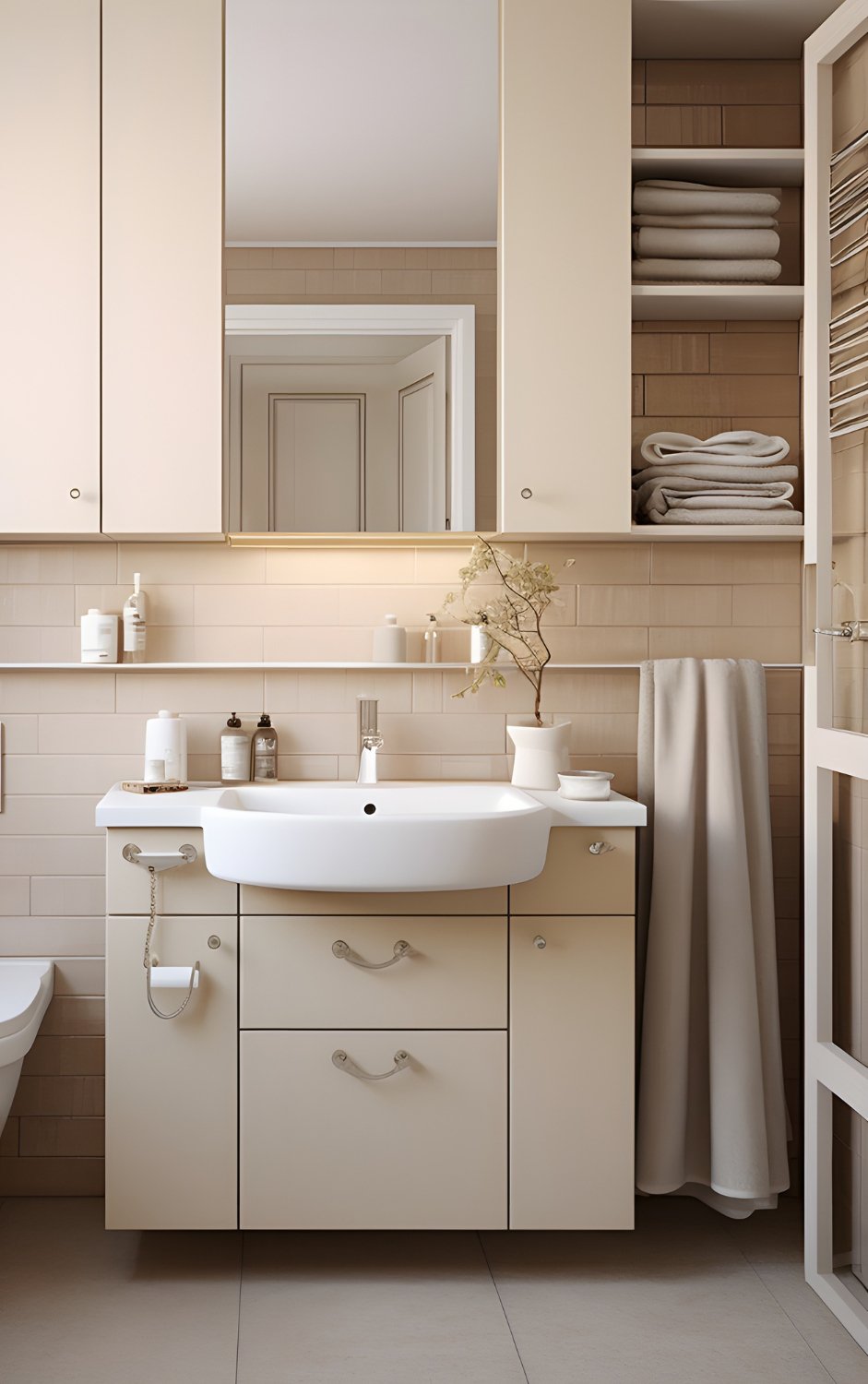
Wall-mounted vanity cabinets are attached directly to the wall with no contact between the cabinet base and the floor. This configuration has grown dramatically in popularity over the past five years and in 2026 sits at the center of contemporary and transitional bathroom design.
The practical benefits of a floating vanity go beyond aesthetics. An exposed floor beneath the cabinet makes cleaning significantly easier, creates a visual sense of floor space that makes smaller bathrooms feel larger than their actual dimensions, and allows the vanity height to be set to the exact preference of the household rather than defaulting to a standard thirty-two inch floor-mounted height.
From a design perspective, the floating vanity is one of the cleanest architectural moves available in bathroom renovation. The gap between the cabinet bottom and the floor creates a shadow line that adds depth and dimension to the room and gives the vanity a custom, built-in quality that freestanding configurations cannot match.
Wall-mounted vanities require solid blocking in the wall for structural support and a plumber to reposition supply and drain lines if the existing rough-in does not align with the new cabinet. These are real installation considerations that add to the project cost. For bathrooms being fully renovated where walls are opened anyway, the additional cost is minimal. For bathrooms where only the vanity is being replaced, the structural and plumbing requirements of a floating vanity need to be factored into the total budget.
Vessel Sink Vanity Cabinets
Designed specifically to support a vessel sink — a basin that sits above the countertop surface rather than being recessed or undermounted into it. Vessel sink vanities are typically shorter than standard configurations, running between twenty-eight and thirty-one inches in height, to compensate for the added height of the above-counter basin.
The vessel sink configuration creates a sculptural, boutique hotel quality in a bathroom that standard undermount or drop-in sink configurations cannot replicate. It is best suited to bathrooms where the vanity is a deliberate design statement rather than purely a functional element, and where the scale of the room supports the visual drama of an above-counter basin.
Single vs. Double Vanity Cabinets
Single vanity cabinets, typically ranging from twenty-four to forty-eight inches in width, are the standard choice for guest bathrooms, powder rooms, and any bathroom serving a single occupant. They work in virtually any bathroom footprint and provide ample storage for individual use.
Double vanity cabinets, beginning at sixty inches in width and commonly running to seventy-two or eighty-four inches, are designed for shared bathrooms where two people need simultaneous access. In a primary bathroom renovation, a double vanity is consistently the most requested upgrade — and the one that most dramatically changes how the room functions for the household.
The decision between single and double is primarily determined by the bathroom footprint. A minimum of five feet of clear floor space in front of a double vanity is needed for comfortable use by two people simultaneously. If the bathroom cannot accommodate this clearance, two strategically placed single vanities on opposite walls often delivers a better functional result than a double vanity that crowds the movement space.
Bathroom Vanity Cabinet Styles: What Works in 2026
Shaker Vanity Cabinets
Shaker is the most consistently executed vanity cabinet style in bathroom renovation for the same reason it dominates kitchen cabinetry. The clean recessed panel profile works in traditional, transitional, farmhouse, and contemporary bathroom contexts without requiring commitment to a specific design direction. White shaker vanity cabinets are the single most purchased bathroom vanity configuration in the United States and have been for the better part of a decade.
The strength of shaker in the bathroom is its adaptability. Change the hardware and you change the entire character of the vanity. Matte black hardware on a white shaker vanity delivers a crisp, modern result. Brushed gold on the same cabinet creates a warm, transitional aesthetic. Oil-rubbed bronze shifts the design toward classic or farmhouse territory. The cabinet itself is the neutral canvas that hardware, mirrors, and lighting paint upon.
Flat Front Vanity Cabinets
Flat front or slab door vanity cabinets deliver a clean, minimal aesthetic best suited to contemporary and modern bathroom designs. Without any door profile detail, the color and material of the cabinet front carry the entire design weight. This works beautifully in navy, dark gray, or natural wood finishes where the color itself is the statement, and in white when the surrounding bathroom design is strong enough to provide the visual interest the cabinet surface does not.
Natural Wood Vanity Cabinets
The same natural wood movement driving white oak kitchen cabinet demand in 2026 is equally present in bathroom vanity design. A white oak or warm wood-tone vanity cabinet brings organic warmth into a bathroom that tile, stone, and painted surfaces cannot provide on their own. Natural wood vanity cabinets are particularly effective in spa-inspired bathroom designs where the goal is a retreat-like quality rather than a purely functional space.
Two-Tone Vanity Cabinets
Just as two-tone combinations are dominating kitchen cabinet design in 2026, the same principle is appearing in bathroom vanity design. A vanity cabinet base in navy or gray paired with a different color or material on any open shelving, linen tower, or side cabinet creates the layered, designed quality that single-finish bathrooms struggle to achieve. This approach works especially well in larger primary bathrooms where the vanity occupies enough wall space to support a more complex design composition.
The Best Colors for Bathroom Vanity Cabinets in 2026
Color selection for a bathroom vanity cabinet follows similar principles to kitchen cabinet color selection, with one important difference. Bathrooms are typically smaller spaces where a single cabinet color has a more concentrated effect on the overall feel of the room. A bold color that works comfortably in a kitchen with fifteen cabinets may need more careful consideration in a bathroom with a single six-foot vanity.
White remains the most universally chosen vanity cabinet color for its brightness, versatility, and resale appeal. In a small bathroom, white creates the maximum sense of space. In a large primary bathroom, white provides the neutral foundation that allows statement tile, bold mirrors, and distinctive hardware to carry the design.
Our DDW Double Dove White works as beautifully in a bathroom vanity context as it does in a full kitchen renovation. The warm dove tone is flattering under the warm artificial lighting that most bathrooms rely on, and its versatility with every hardware finish makes it the safest and most rewarding vanity color choice available.
Gray vanity cabinets deliver a sophistication in the bathroom that white cannot quite match. Medium gray is particularly effective in primary bathrooms where the design goal is an elevated, spa-inspired quality rather than a purely functional space. The practical benefit of gray — its ability to conceal minor marks and surface variation better than white — is arguably even more relevant in a bathroom than in a kitchen given the moisture, condensation, and daily contact the vanity surface endures.
Our GR Shaker Gray translates directly from kitchen to bathroom with the same warm, balanced tone that makes it one of our most consistently admired products across both renovation categories.
Navy in a bathroom vanity context is one of the most striking design choices available in 2026. A navy vanity in an otherwise neutral bathroom creates a focal point of genuine sophistication. It works particularly well in primary bathrooms with white or light marble tile, gold hardware, and a large framed mirror where the combination creates the boutique hotel quality that is one of the most sought-after aesthetics in bathroom renovation.
Our NB Navy Blue in a bathroom vanity configuration paired with unlacquered brass hardware and a white marble countertop is one of the most admired design combinations we have seen executed with our products. The scale of a bathroom vanity actually suits navy particularly well because the smaller footprint prevents the color from becoming overwhelming in the way it could in an under-lit kitchen.
Natural wood vanity cabinets, particularly in white oak tones, create an organic warmth in the bathroom that no painted finish can replicate. Our SWO Slim White Oak paired with a stone countertop, matte black fixtures, and natural stone tile creates the spa-retreat bathroom aesthetic that consistently generates the most admiration in the renovation design community.
Sizing Guide: Getting the Dimensions Right Before You Order
Vanity cabinet sizing is where more renovation mistakes are made than anywhere else in the bathroom purchase process. Measure three times. Order once.
The standard vanity cabinet height for floor-mounted configurations runs between thirty-two and thirty-six inches, with thirty-four to thirty-six inches being the current preference as it more closely matches standard kitchen counter height and is more ergonomically comfortable for most adults. Floating vanities can be installed at any height, which is one of their most practical advantages for households with specific ergonomic needs.
Standard vanity cabinet depths run between eighteen and twenty-one inches. This is shallower than kitchen base cabinets, which typically run twenty-four inches, and the difference matters for bathroom layouts where floor space between the vanity and the opposite wall or the toilet determines how comfortably the room functions.
Width selection should be driven by two factors: the available wall space and the minimum clearance requirements for the room to function properly. A minimum of fifteen inches of clearance from the center of the toilet to any adjacent obstruction including the vanity side is required by most building codes. Thirty inches of center-to-center clearance is the comfortable standard in primary bathrooms.
For double vanities, confirm that the combined cabinet width plus the mirror, any side storage, and the door swing clearances all fit within the available space before ordering. A double vanity that crowds the bathroom door or forces a tight squeeze past the toilet delivers a worse daily experience than a properly sized single vanity in the same space.
What to Look for When Buying Bathroom Vanity Cabinets
The bathroom is a more demanding environment than the kitchen in one critical respect: moisture. Condensation from daily showers, steam from hot water, and the constant proximity of plumbing create conditions that expose inferior materials faster than almost any other environment in the home.
Plywood box construction is non-negotiable for a bathroom vanity cabinet. Particleboard swells, warps, and ultimately fails under the moisture exposure that every bathroom vanity endures over its life. This is true even for vanity cabinets in bathrooms with excellent ventilation. Plywood resists moisture absorption at the cellular level in a way particleboard simply cannot.
The door frame material requires the same scrutiny. Solid wood door frames resist the expansion and contraction caused by humidity variation better than MDF. In a bathroom where the shower runs daily and humidity levels fluctuate significantly, the difference between solid wood and MDF door frames becomes visible within a few years in the form of finish cracking at corners and door warping that prevents clean closure.
The finish applied to a bathroom vanity cabinet must be moisture and chemical resistant. Bathrooms are cleaned with considerably more aggressive products than kitchens. A catalyzed or conversion varnish topcoat handles regular cleaning with bathroom cleaners, disinfectants, and the occasional harsh product far better than standard air-dry finishes.
Hardware quality matters as much in a bathroom as in a kitchen. Soft-close hinges and drawer glides should be standard. In a bathroom, the additional benefit of soft-close is that it prevents the slamming that loosens door and drawer alignments over time — particularly relevant in the humid conditions that expand and contract wood slightly with every shower cycle.
Finally, confirm the plumbing cutout configuration before ordering. Vanity base cabinets require specific cutout dimensions and positions for supply lines and drain connections. A cabinet that does not accommodate your existing rough-in requires plumbing modification that adds cost and time to the project. Most quality vanity cabinet suppliers provide clear plumbing accommodation specifications. Verify them against your existing rough-in before placing the order.
Design Combinations That Work Exceptionally Well in 2026
The most admired bathroom vanity designs of the year are built around material contrasts that create visual richness without complexity. These are the combinations generating the strongest results across design styles and budget levels.
A white shaker vanity with a white marble or marble-look quartz countertop, brushed gold fixtures and hardware, large format light gray tile, and a warm-toned framed mirror creates the transitional primary bathroom aesthetic that the majority of homeowners are trying to achieve. It is warm, layered, and genuinely beautiful without requiring a designer’s budget.
A navy flat-front vanity with a white vessel sink or undermount basin, unlacquered brass hardware, white subway tile with dark grout, and industrial-style exposed pipe fixtures creates a boutique hotel bathroom in a modest footprint. This combination works in primary bathrooms and surprisingly well in guest bathrooms where the smaller scale actually suits the boldness of the navy.
A white oak vanity with a concrete or honed stone countertop, matte black fixtures, large format porcelain tile in a warm beige or greige tone, and a simple frameless mirror creates the Japandi spa bathroom that is one of the most searched and most aspirational bathroom aesthetics in 2026. The natural material of the wood cabinet does the majority of the design work. Everything else simply needs to stay out of its way.
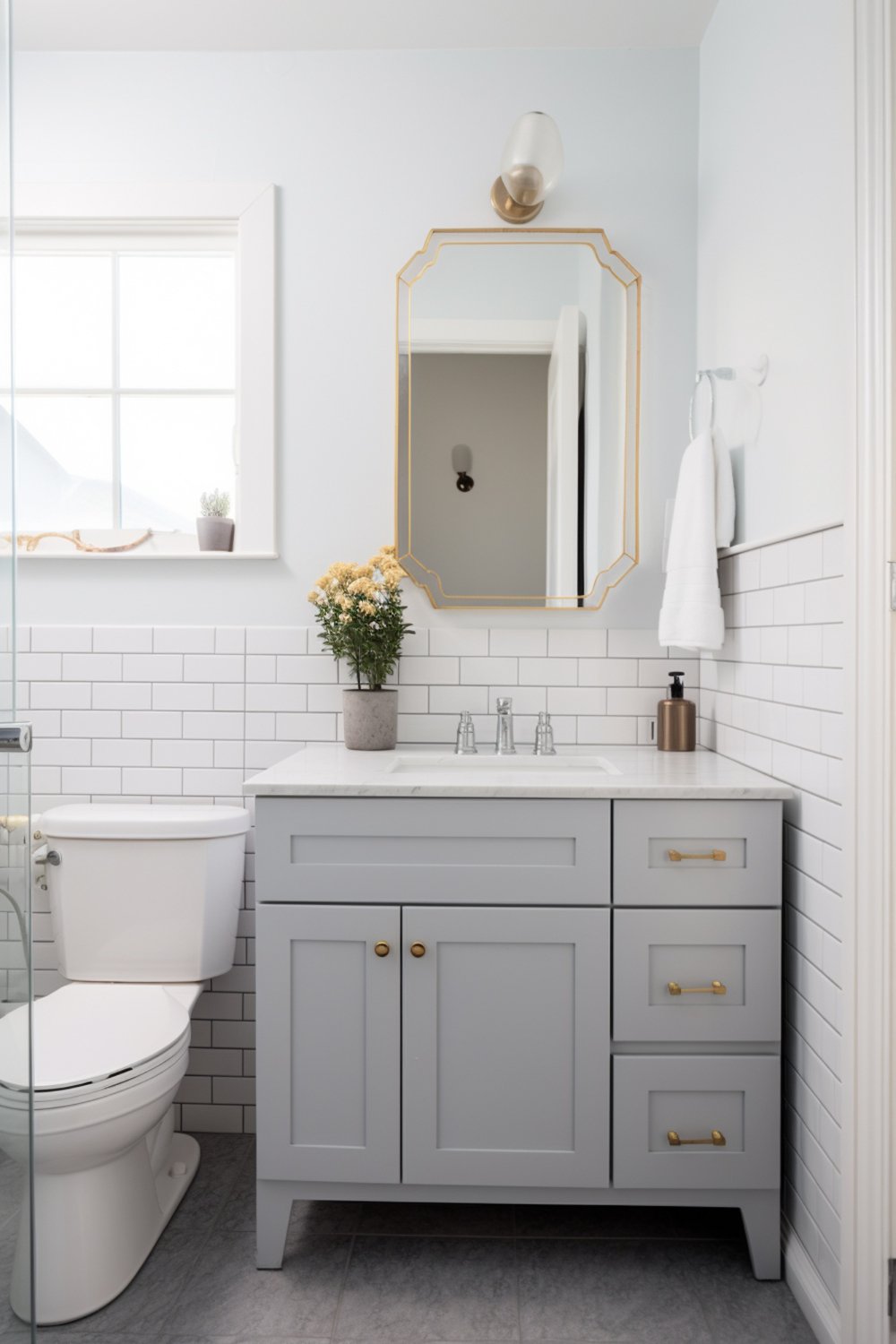
A gray shaker vanity with a white quartz countertop, champagne bronze hardware, white beveled subway tile, and warm overhead lighting creates the transitional bathroom that performs best across the widest range of buyer preferences. It is the safest renovation investment for homes being prepared for sale and one of the most genuinely pleasing daily environments for homes being renovated to live in.