Kitchen cabinet cost is one of the most misunderstood parts of any renovation budget. Ask three different contractors what new cabinets will cost and you will get three very different answers — because pricing depends heavily on where you buy, what style you choose, and how many middlemen are involved between the factory and your kitchen. This guide gives you real numbers so you can budget accurately and avoid overpaying.
Average Kitchen Cabinet Cost by Purchase Channel
The biggest factor in kitchen cabinet cost is not the quality of the product — it is where you buy it. Here is a realistic breakdown by channel:
Kitchen Size | Big-Box Store | Designer Showroom | Factory-Direct (Lmereody) |
|---|
Small (under 100 sq ft) | $2,000 – $5,000 | $6,000 – $15,000 | From $1,499 |
Medium (100–200 sq ft) | $5,000 – $12,000 | $14,000 – $30,000 | $2,500 – $6,000 |
Large (200+ sq ft) | $12,000 – $25,000 | $30,000 – $60,000+ | $5,000 – $12,000 |
Design Service | Not included | $1,000 – $3,000 extra | FREE included |
Delivery | Extra charge | Extra charge | Free on orders $2,400+ |
What Drives Kitchen Cabinet Cost Up?
Understanding what makes cabinets more expensive helps you spend smarter. Here are the main cost drivers:
1. Cabinet Construction Material
Solid wood and plywood construction costs more than MDF or particle board — but lasts significantly longer and holds hardware fasteners better over time. Always ask what the box and door are made of before you buy. Particle board cabinets may be cheaper upfront but often require full replacement within 10 years, dramatically increasing your long-term kitchen cabinet cost.
2. Door Style and Finish
Simple shaker doors cost less than raised-panel or beaded-inset designs. Painted finishes cost more than thermofoil. Custom colors cost more than standard stock colors. Choosing from in-stock styles and finishes is the fastest way to reduce kitchen cabinet cost without sacrificing quality.
3. Hardware
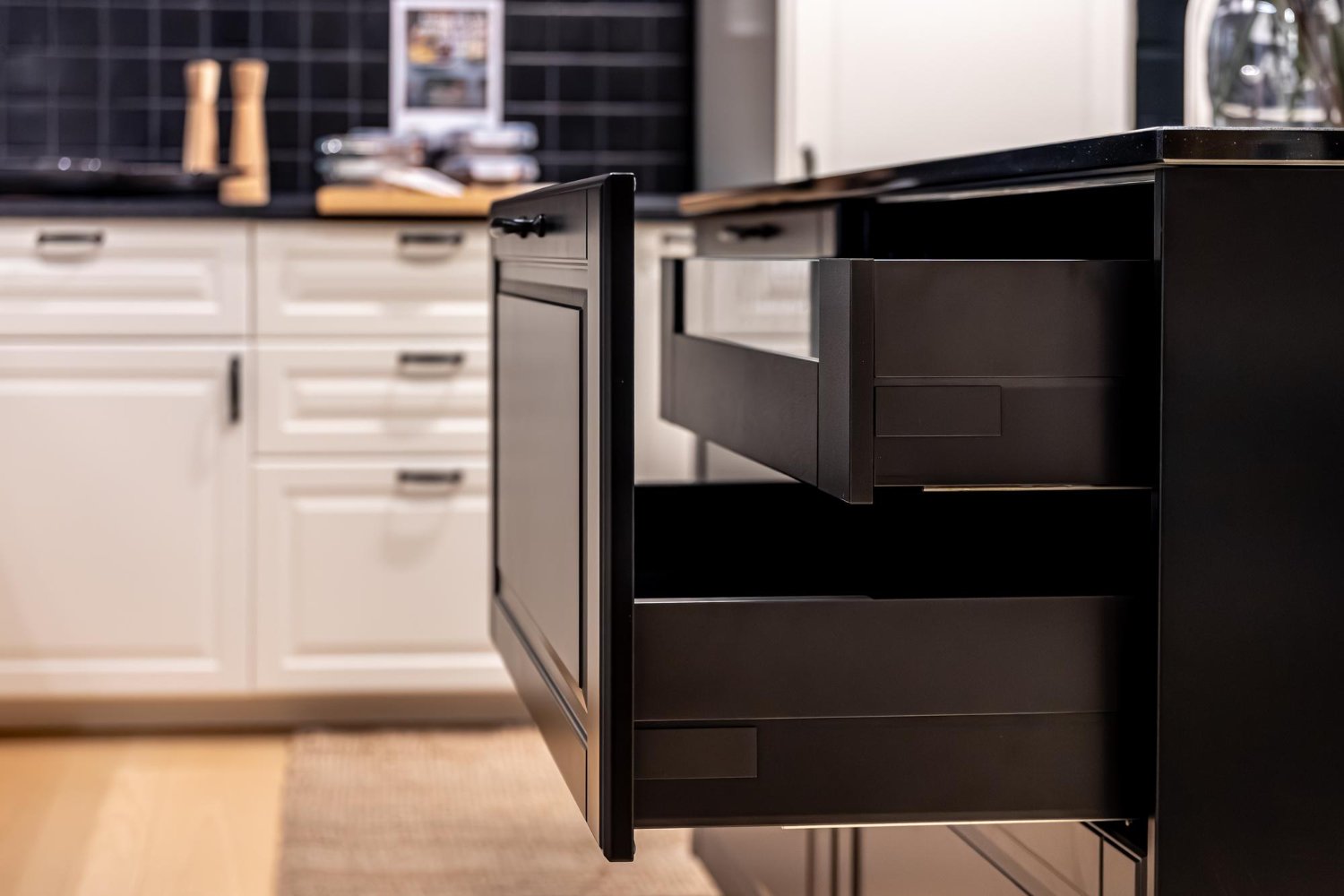
Soft-close hinges and drawer slides are now considered standard by most quality manufacturers — and should be included in the base price. Be cautious of brands that advertise a low base price and charge extra for soft-close hardware.
4. Cabinet Configuration
Specialty cabinets — lazy Susans, pull-out shelves, corner solutions, and drawer bases — cost more than standard door cabinets. Budget 15% to 25% more for kitchens that require extensive specialty configurations.
5. Supply Chain Markups
As outlined earlier, buying through a showroom or retail chain adds 2x to 4x in markups to the base manufacturing cost. Factory-direct purchasing removes these markups entirely — the most effective way to reduce kitchen cabinet cost without reducing quality.
Kitchen Cabinet Cost Per Linear Foot
A common industry benchmark is kitchen cabinet cost per linear foot. This measures the total cabinet cost divided by the linear footage of cabinets installed:
- Stock big-box cabinets: $150 to $400 per linear foot installed
- Semi-custom showroom cabinets: $400 to $800 per linear foot installed
- Custom showroom cabinets: $800 to $1,500+ per linear foot installed
- Lmereody Cabinetry factory-direct: $150 to $350 per linear foot (cabinets only, before installation)
Note: These figures are for the cabinets themselves and do not include countertops, installation labor, backsplash, or appliances.
How to Reduce Kitchen Cabinet Cost Without Sacrificing Quality
- Buy factory-direct — eliminate all supply chain markups
- Choose in-stock colors and door styles — custom costs more and takes longer
- Mix RTA and pre-assembled cabinets — use RTA where access allows to reduce cost
- Order free samples first — avoid costly returns from choosing the wrong finish
- Use the free design service — avoid ordering the wrong sizes or configurations
- Take advantage of free shipping thresholds — Lmereody ships free on orders over $2,400
Is 2025 a Good Time to Buy Kitchen Cabinets?
New tariffs on imported cabinets introduced in 2025 have pushed retail and big-box cabinet prices higher. Brands that source through overseas importers are passing these costs directly to consumers.
Factory-direct brands like Lmereody Cabinetry that control their own manufacturing supply chain are better positioned to absorb cost pressures — meaning the price gap between factory-direct and retail is larger in 2025 than it has ever been. If you are planning a kitchen renovation, buying factory-direct now makes more financial sense than it has in years.