Step 2 — Measure Each Wall
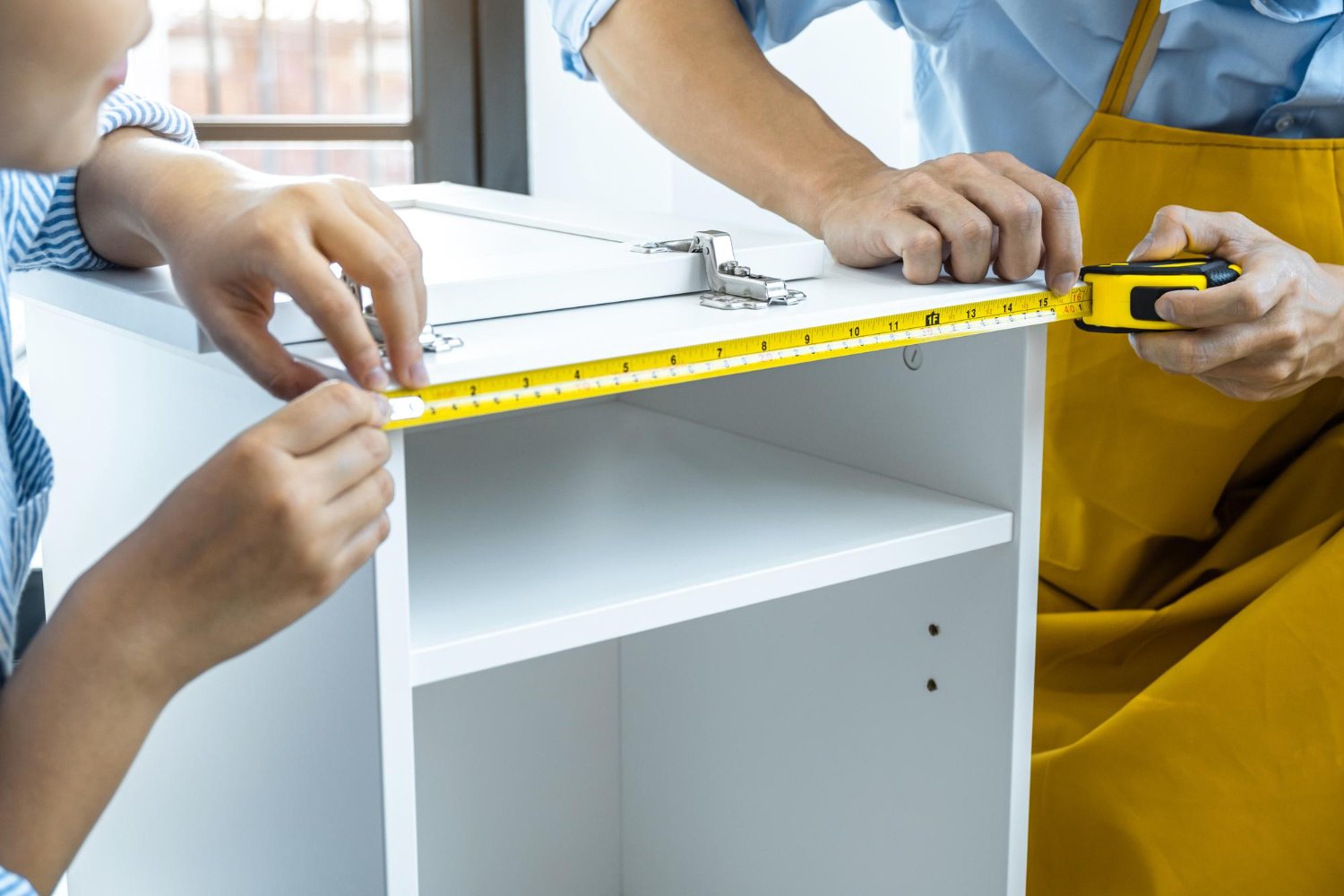
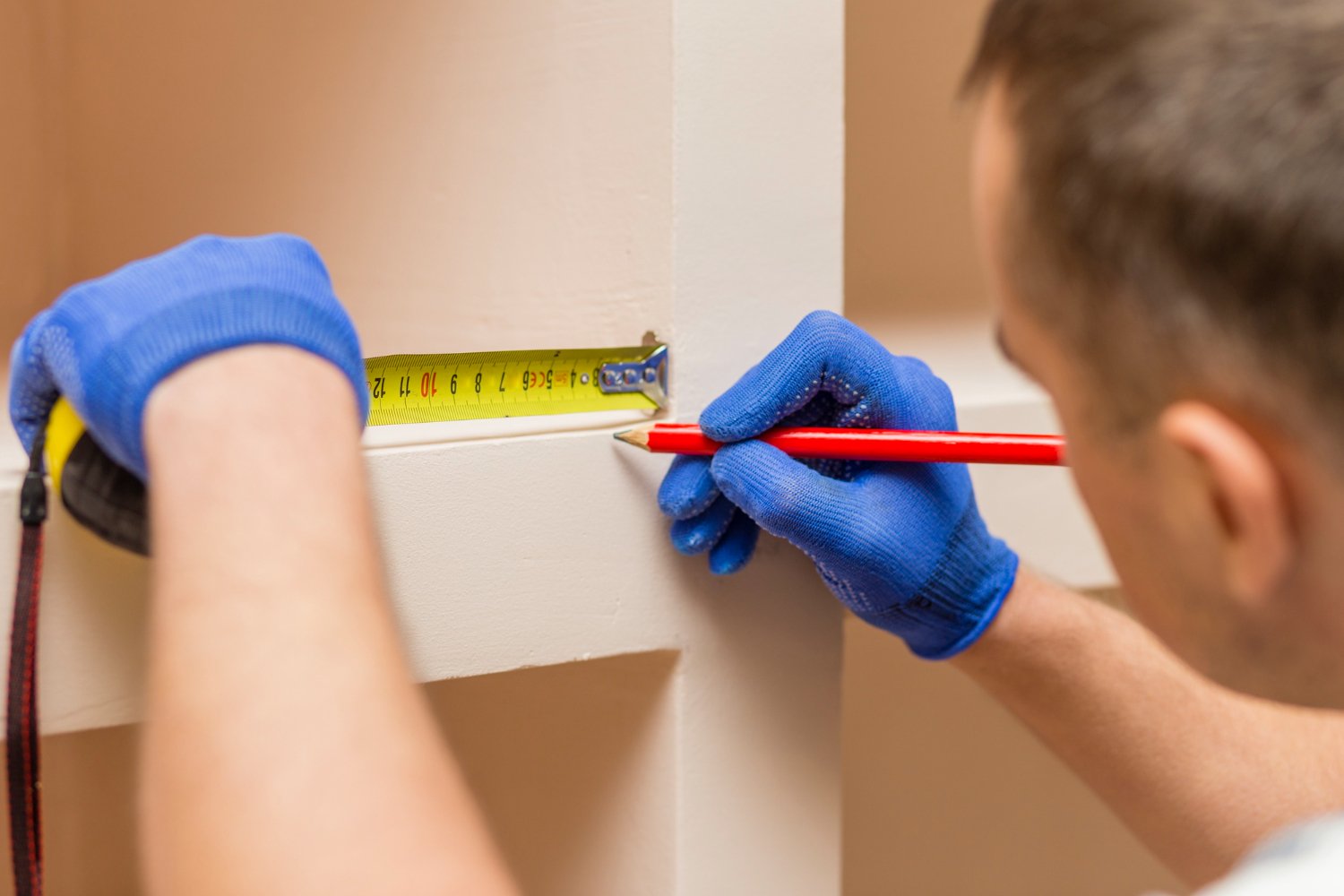
Measure the total length of each wall from corner to corner at counter height (approximately 36 inches from the floor). Write down the measurement for each wall.
Then measure from the floor to the ceiling on each wall. Standard ceiling height is 96 inches (8 feet), but many homes vary. Knowing your ceiling height determines the size of your tall and upper cabinets.
- Measure wall length at counter height (36 inches from floor)
- Measure floor to ceiling height on each wall
- Note any soffits — boxed-in areas above upper cabinet space
- Note any sloped ceilings or irregularities
Step 3 — Measure Windows and Doors
For every window and door on each wall, record three measurements:
- Distance from the corner of the wall to the edge of the window or door frame
- Width of the window or door frame itself
- Height of the window sill from the floor (for windows)
This tells you exactly what cabinet space is available on either side of each window and door — and how tall your upper cabinets can be before they conflict with a window sill.
Step 4 — Measure for Base Cabinets
Base cabinets sit on the floor and run along the lower portion of your kitchen walls. Standard base cabinet dimensions are 34.5 inches tall and 24 inches deep. The countertop adds 1.5 inches to bring the working surface to 36 inches.
Measure the available run of wall space for base cabinets on each wall, subtracting any doors, appliances, or fixtures. Note the exact position of your sink plumbing, dishwasher location, and any floor vents that may require clearance.
- Standard base cabinet height: 34.5 inches (36 inches with countertop)
- Standard base cabinet depth: 24 inches
- Measure total run minus doors, appliances, and fixtures
- Mark sink plumbing location on your sketch
Step 5 — Measure for Upper (Wall) Cabinets
Upper cabinets mount on the wall above the countertop. The standard gap between countertop and the bottom of upper cabinets is 18 inches — this gives you comfortable workspace and backsplash area.
Measure from 54 inches off the floor (18 inches above the standard 36-inch countertop height) to your ceiling, or to any soffit. This is your available upper cabinet height. Standard upper cabinets are 12 inches deep.
- Standard upper cabinet bottom: 54 inches from floor
- Measure from 54 inches to ceiling or soffit
- Standard upper cabinet depth: 12 inches
- Note window positions — upper cabinets cannot overlap windows
Step 6 — Measure for Tall Cabinets and Pantries
Tall cabinets — pantry cabinets, oven housings, and utility cabinets — run floor to ceiling and are typically 84 to 96 inches tall and 24 inches deep. Mark on your sketch where you plan to place any tall cabinets and measure the exact wall space available.
Step 7 — Account for Appliances
Measure the width, height, and depth of every appliance that sits between or below cabinets:
- Refrigerator — note width plus any hinge clearance needed on the opening side
- Range or cooktop — standard width is 30 or 36 inches
- Dishwasher — standard width is 24 inches
- Built-in microwave or oven — measure the cabinet cutout dimensions
Cabinet runs must accommodate your appliances exactly. If your refrigerator is 36 inches wide, the cabinet space allocated for it must be at least 36 inches plus clearance.
Share Your Measurements — We Do the Rest
Once you have your measurements, Lmereody Cabinetry’s free design service does the heavy lifting for you. Our professional kitchen designers take your measurements and create full-color 3D renderings showing exactly how your new cabinets will look in your space — before you spend a dollar on product.